
-
Suresh Kalal
- February 23, 2026
- No categories assigned.
- No Comments
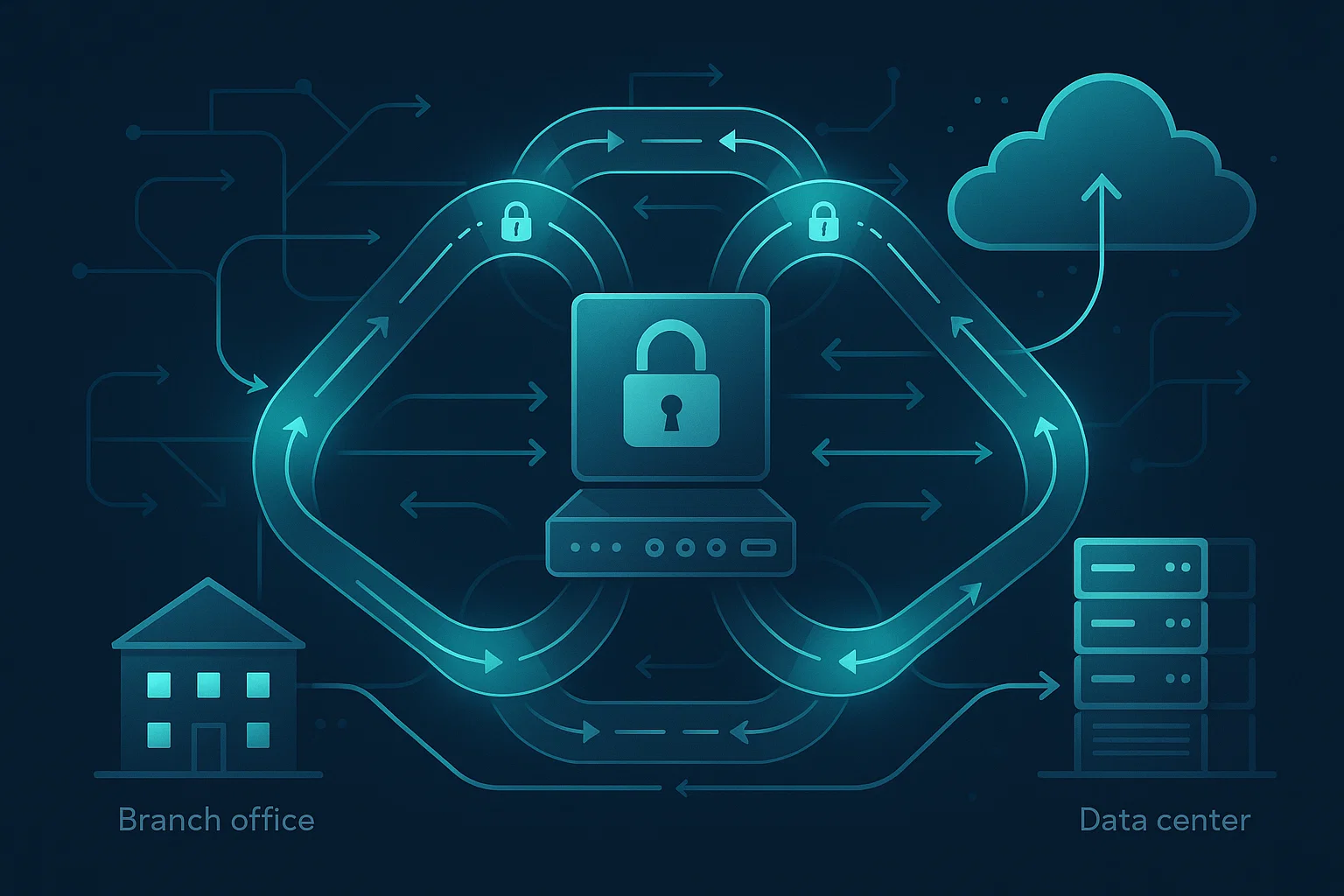
Building Resilient VPN Architectures Using Route-Based VPN and Tunnel Interfaces
When companies think of “resilience,” they often jump straight to backup strategies, multi-region configurations and high-availability firewalls. But an area silently keeping it all together is also the most underlooked when things go bad: The VPN architecture. So long as branches have to talk securely to the data centre, and DCs need to reach out into the cloud and back again, clouds need a way of getting home-workloads… point is, VPNs are sitll the connective tissue. The issue is that the typical policy-based VPNs, single-path tunnels can not always keep up with operational expectations today and especially when the need for uptime are more stringent, traffic will shift constantly.
Here’s where route-based VPNS, VTI and clever multi-path redundancy come into their own. They enable networks to adapt and reroute, and stay alive even when the individual paths die. And, unlike the old way of linking VPN behavior to static policies, route-based architectures afford IT teams significantly more flexibility in creating resilient, scale-in-a-snap and cloud-ready models of connectivity.
But let’s say there’s a better way for a resilient VPN setup, today, and it involves—well, not speaking TP: This is what organisations are doing to ensure that peak-time traffic spikes or outages don’t tray the dogs.
Why Route-Based VPNs Have Become the New Default
For years, policy-based VPNs got the job done. You defined a set of interesting traffic, the firewall matched it, encrypted it, and sent it across. Simple—until networks started becoming more dynamic. Cloud adoption, SD-WAN policies, multi-site routing, and load balancing demanded flexibility that policy-based VPNs couldn’t deliver.
Route-based VPNs change the game. Instead of tying IPsec encryption to a policy, you bind the encrypted tunnel to a virtual interface. Traffic gets routed like any other interface-based path. This means:
- You can run dynamic routing protocols (OSPF, BGP, even RIP in legacy setups) across the tunnel.
- You no longer need dozens of manual phase 2 entries for each subnet.
- Multi-path routing becomes achievable and predictable.
- HA failovers become much smoother.
A route-based VPN essentially behaves like a stable pipe between two endpoints—and the routing protocol decides what to do with data flowing inside.
This shift from policy-matching to route-driven logic is one of the reasons large-scale deployments almost always choose route-based designs today.
Tunnel Interfaces: The Backbone of Modern VPN Flexibility
Route-based VPNs rely on tunnel interfaces—often called VTIs, tunnel.1, or simply “tunnel interfaces” depending on the vendor. Think of a tunnel interface as a logical network interface that happens to be encrypted end-to-end. Once this interface is up, you can treat it like any other interface:
- assign IPs
- run routing protocols
- set metrics
- monitor via keepalives
- apply traffic shaping
- integrate it into HA configurations
Tunnel interfaces bring clarity: instead of managing VPN behaviour through complex policy entries, you now have an object that behaves predictably and integrates cleanly with the rest of the routing fabric.
This also makes advanced topologies—like hub-and-spoke, full mesh, or cloud edge connectivity—much easier to maintain.
Designing for High Availability: Why VPN Redundancy Matters
High availability in VPN design isn’t just about preventing downtime. It’s about preventing unpredictable behaviour during failover. A single tunnel may look fine on paper, but the moment you need routing convergence, load sharing, or instantaneous failover, its limitations become obvious.
A resilient VPN architecture typically includes:
1. Multiple tunnels between sites
Bored tunnels (two between the same endpoints) or multi-gateway setups create path diversity. This ensures that if one ISP, routing path, or interface goes down, another takes over.
2. Dynamic routing protocols
OSPF and BGP are the most common choices.
They help the network automatically converge when paths fail or degrade.
Key benefits include:
- Automated failover
- Better path selection
- Less manual reconfiguration
- More stable long-term operations
3. Health-checking mechanisms
Dead peer detection (DPD), BFD (Bidirectional Forwarding Detection), and routing protocol keepalives allow the network to detect and fail over very quickly.
4. Active-active or active-passive HA firewalls
Your firewall pair or cluster should reinforce VPN uptime by:
- keeping tunnel security associations synced
- avoiding re-key events during failover
- shifting traffic without interrupting sessions
A well-designed HA VPN setup prevents customers, remote employees, and cloud apps from noticing anything—even during a major link outage.
Multi-Path VPN: Where Performance Meets Reliability
One of the most significant advantages of route-based designs is the ability to support multi-path connectivity. Multi-path VPNs use multiple ISPs, multiple tunnels, or multiple routing paths to:
- balance traffic
- improve throughput
- eliminate single points of failure
- support SLA-based application steering
This concept is a core component of SD-WAN, but even without full SD-WAN adoption, traditional firewalls can still implement intelligent multi-path VPN behaviour.
For example:
- A site may use MPLS as the primary tunnel and broadband as the secondary.
- Both can stay active simultaneously.
- BGP selects the better path based on weight, local preference, or AS path length.
- If MPLS drops or degrades, broadband immediately takes over.
With tunnel interfaces, these behaviours become straightforward to configure and maintain.
Building a Scalable Route-Based VPN Design
Let’s walk through the major components of a well-designed route-based architecture. This applies to most firewalls—Fortinet, Palo Alto, Cisco, Juniper, Sophos, and others—even if naming conventions differ.
1. Create two or more tunnel interfaces
Each interface corresponds to a specific path (e.g., primary ISP, secondary ISP).
Assign an IP on both ends of each tunnel.
2. Bind IPsec policies to the tunnel interfaces
You only need one phase 2 entry per tunnel—far simpler than managing subnet pairs.
3. Establish dynamic routing
BGP is ideal when:
- connecting large branch networks
- integrating with cloud providers
- using multi-ISP or multi-tunnel architectures
- needing granular path selection
OSPF works well in internal hub-spoke environments where simplicity matters more.
4. Set metrics or BGP attributes
Define which tunnel is primary:
- Lower OSPF cost
- Higher BGP local preference
- Shorter AS-path
This avoids routing loops or unexpected path choices.
5. Enable fast detection
Use a combination of:
- DPD
- BFD
- Tunnel monitoring
- Routing protocol timers
This ensures that failover is near instant.
6. Test failover regularly
Many networks deploy redundancy but never validate behaviour. A quarterly test keeps you ahead of unexpected surprises.
Integrating Cloud Connectivity
Most modern architectures involve cloud extensions—AWS, Azure, GCP, or even private cloud environments. Almost all cloud providers now support route-based VPNs and tunnel interfaces natively.
Benefits include:
- Consistent routing behaviour
- HA designs with dual tunnels
- Automated failover via BGP
- Predictable latency behaviour
- Better scalability for VPC/VNET growth
If you’re still using a policy-based VPN for cloud workloads, you’re likely missing out on faster convergence and better reliability.

Avoiding Common Design Mistakes
Even experienced architects sometimes fall into a few traps when implementing route-based VPNs. Some of the most common include:
1. Creating multiple tunnels but not adjusting routing metrics
If both tunnels have equal metrics, the firewall may load balance unintentionally—and not always in ways you’d prefer.
2. Forgetting to enable anti-replay windows
Especially in multi-path designs, packets may arrive out of order, triggering drops.
3. Using extremely aggressive BGP timers
Fast failover is great, but overly tight timers can cause unnecessary flapping.
4. Not accounting for asymmetric routing
When tunnels exist on multiple ISPs, return traffic sometimes follows the wrong path unless routing attributes are planned carefully.
5. Relying solely on DPD
DPD detects dead peers, not degraded paths. Combine it with BFD or routing-based monitoring.
Avoiding these pitfalls keeps your architecture predictable and stable.
When to Use Active-Active vs Active-Passive HA
Both models work well with route-based VPNs, but they require different planning.
Active-Passive
- Simpler to configure.
- Session sync ensures minimal disruption.
- Best for sites with predictable traffic profiles.
Active-Active
- Both firewalls actively forward traffic.
- Tunnels often run across both appliances.
- Can increase throughput but requires strict routing control.
Whichever model you choose, keep tunnel interfaces consistent across appliances to avoid mismatches during failover.
The Future of Resilient VPN Architectures
Even with SD-WAN gaining traction, route-based VPNs aren’t going anywhere. In fact, modern SD-WAN often uses route-based tunnels and BGP under the hood. That’s because route-based architectures provide:
- vendor-agnostic interoperability
- predictable failover
- scalability into cloud environments
- flexibility for multi-path and hybrid WAN setups
As networks continue to grow more complex, the importance of a clean and resilient VPN design only increases. Organisations that build reliable route-based VPN architectures today will enjoy smoother cloud migrations, simpler routing, and far fewer late-night outage calls.
Conclusion
It is not just about uptime, but predictability of service, flexibility of use and keeping your operations intact when areas of the network start to fail. The cornerstones of secure communications like route-based VPNs, tunnel interfaces, dynamic routing and multi-path redundancy are built on this. Be it branch interconnection or cloud workloads or, even far-flung team extension this design practice ensures the network can morph as needs evolve.
By relying on tunnels and routing over static policy, organizations have a more stable and scalable control plane that is easier to troubleshoot, simpler to grow, and much better aligned with hybrid environments most companies operate under today.
Recent Posts
- What is AIOps and How is it Changing Network Monitoring in 2025
- A Deep Dive into Active Directory Structure
- Config Drift: The Silent Breaker of Large-Scale Network Environments
- Building a Zero-Trust Architecture Without Breaking User Productivity
- Building a Ticket Prioritization Engine That Actually Works
Recent Comments
- No comments to show