
-
Suresh Kalal
- February 12, 2026
- No categories assigned.
- No Comments
Preventing Frequent Downtime Through Structured IT Monitoring
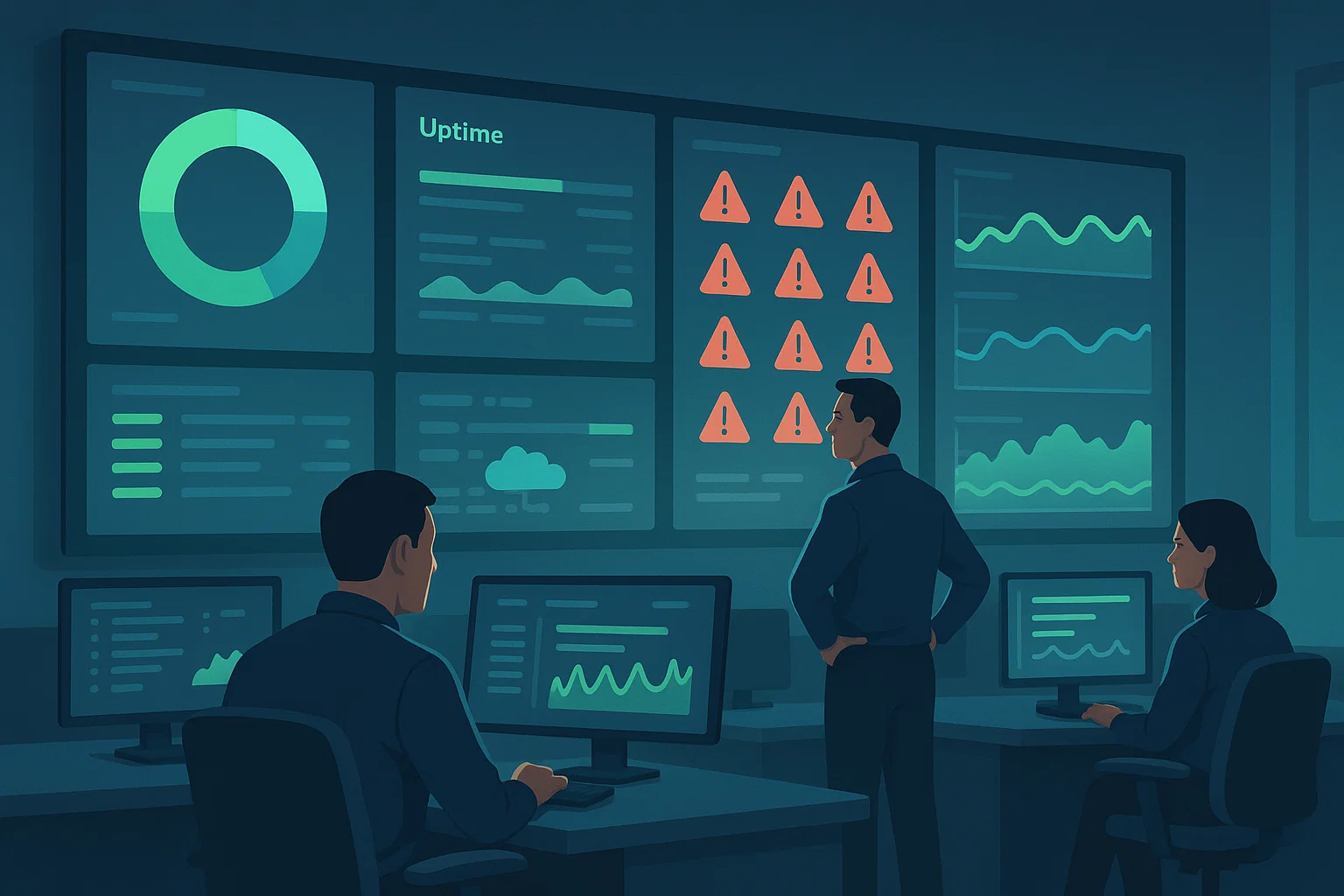
Unplanned downtime rarely happens without warning. Systems slow down, network latency spikes, error logs accumulate, and performance metrics drift away from the norm. These early signals often go unnoticed when monitoring is inconsistent or reactive. Structured IT monitoring provides the visibility needed to detect these patterns early and prevent interruptions before they escalate.
Why Downtime Still Happens Even With Good IT Systems
Most environments today run multiple platforms, applications, and cloud services. Even when each component works well individually, gaps appear when there is no unified method to observe them.
Common reasons include:
- Monitoring only when something breaks
- Relying on manual checks
- Missing alerts buried under noise
- Visibility limited to a few systems instead of the entire stack
- No trend analysis to identify early warning signs
Structured monitoring resolves these issues by collecting and centralizing performance data consistently, around the clock.
The Role of IT Monitoring Tools in Stability
Modern IT monitoring tools go beyond basic uptime checks. They continuously collect real-time metrics across servers, networks, endpoints, databases, and cloud environments.
A structured system typically includes:
- Network uptime monitoring to verify link health, bandwidth usage, and latency
- System performance tracking for CPU, memory, disk, and application behavior
- Alerting engines that escalate issues before users are impacted
- Automated remediation to resolve predictable issues without manual intervention
- Reporting dashboards that reveal bottlenecks and recurring issues
This level of visibility reduces guesswork and strengthens the reliability of the entire environment.
How Structured Monitoring Helps Reduce Downtime
Downtime prevention depends on catching problems early. With a structured monitoring approach, several benefits emerge:
1. Early Detection of System Stress
Slow performance often appears hours or even days before a major failure.
Tracking metrics continuously allows teams to act before systems reach a breaking point.
2. Predictable Maintenance Planning
With insights from trends and logs, maintenance becomes planned instead of reactive.
This supports proactive IT maintenance, where updates, patches, and fixes are scheduled to avoid interruptions.
3. Faster Incident Resolution
When alerts include context—what changed, when it changed, and what system is affected—resolution time drops significantly.
The right data shortens the troubleshooting cycle and minimizes impact.
4. Identifying Recurring Weak Points
Monitoring tools highlight repeating issues such as overloaded servers, misconfigured firewalls, or failing hardware.
Fixing these root causes permanently lowers the risk of downtime.
5. Stronger Support for Modern Distributed Environments
Remote users, cloud apps, hybrid workloads, and SaaS tools depend heavily on connectivity.
Structured monitoring provides the real-time visibility needed to keep these distributed systems stable.

Proactive IT Maintenance Is the Real Game Changer
A reactive approach waits for something to break.
A proactive approach prevents issues before they cause disruptions.
This includes:
- Automated patching
- Real-time alerting
- Capacity planning
- Load analysis
- Monitoring of application dependencies
- Identifying aging hardware before failure
Proactive actions reduce emergency situations, costly service interruptions, and last-minute repairs.
Building a Structured Monitoring Framework
A well-designed structure generally includes:
1. A Single Source of Truth
All logs, performance data, alerts, and events stored in one platform improves clarity and decision-making.
2. Tiered Monitoring (Critical → Important → Non-Critical)
Not all systems require the same level of attention.
Setting priorities ensures critical workloads get the strongest protections.
3. Automated Alerts With Thresholds
Thresholds based on historical data reduce false alarms and provide actionable notifications.
4. Regular Review of Monitoring Reports
Monthly or quarterly evaluations highlight patterns that daily monitoring might not reveal.
5. A Defined Response Playbook
Standard procedures ensure every alert is handled consistently and quickly.
The Outcome: Higher Uptime and Lower Stress
Structured monitoring isn’t just about tools—it’s about discipline, methodology, and consistent visibility.
When systems are monitored the right way, organizations:
- Reduce downtime significantly
- Strengthen performance
- Improve user experience
- Prevent emergency incidents
- Avoid disruptions that impact revenue and productivity
With a structured monitoring strategy in place, the environment becomes more predictable, stable, and resilient—allowing operations to run smoothly without frequent surprises.
Recent Posts
- How to Eliminate Repetitive IT Issues With Better Documentation Practices
- Improving System Security With Structured Patch and Vulnerability Management
- Supporting Remote Teams Effectively With a Strong IT Foundation
- Closing Cybersecurity Gaps by Addressing Overlooked IT Basics
- Managing Software Licenses Efficiently to Minimize Cost and Compliance Issues
Recent Comments
- No comments to show