
-
Suresh Kalal
- March 12, 2026
- No categories assigned.
- No Comments
How to Prevent Internal Data Breaches Through Smarter Access Governance
Organizations around the world spend a lot of money on firewalls, anti-virus and external threat protection. But many of the most significant data leaks aren’t committed by outsiders — they’re done by people inside the network. Sometimes it’s intentional misuse. More frequently, it’s an accidental exposure because of weak access control.
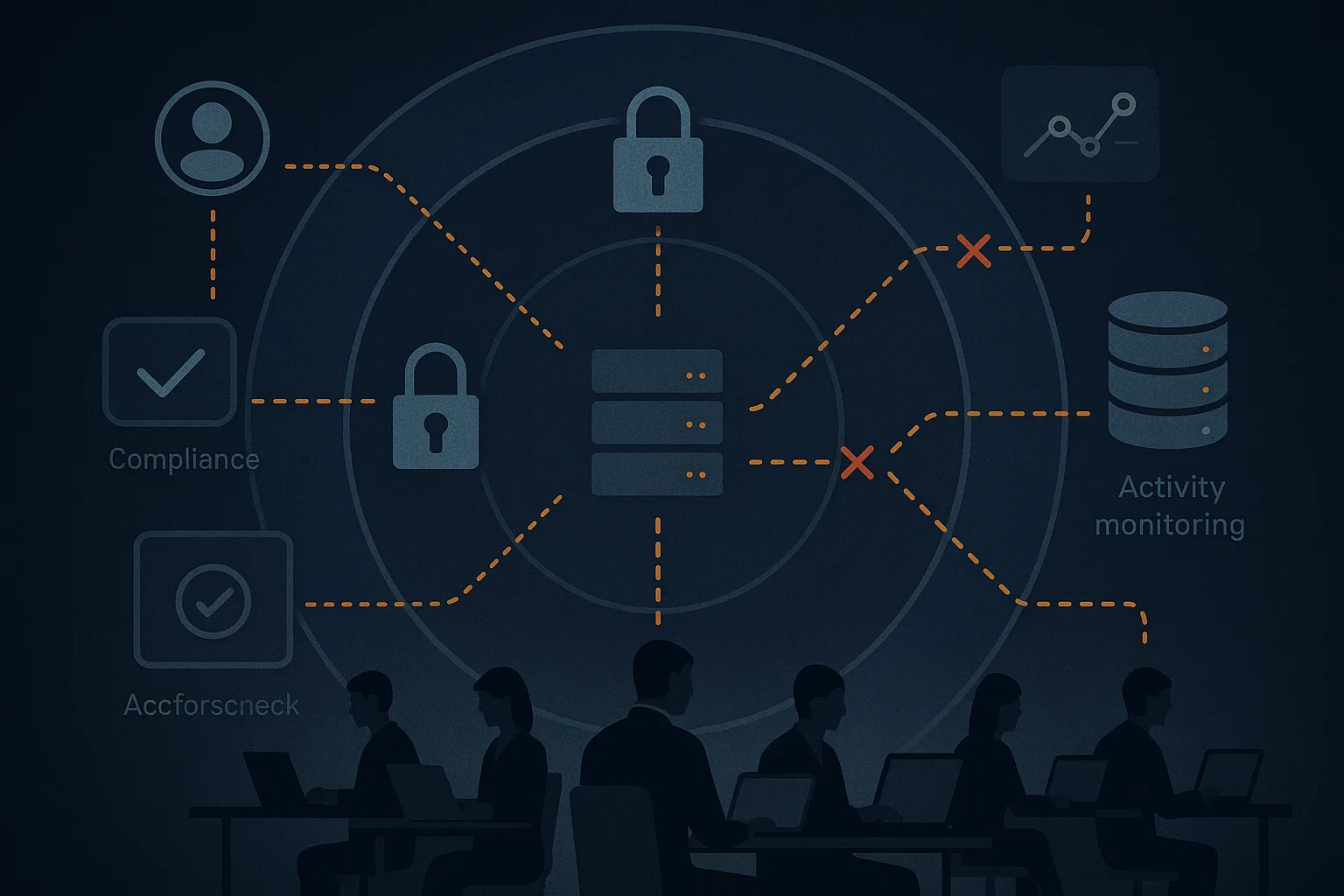
That’s why access governance in IT governance is one of the vital elements in modern IT security policy. Without managing user access, the very best security tools won’t secure sensitive data. The good news is that internal breaches can be very easy to prevent with a well-staged, pragmatic approach to access governance.
This piece will describe how smarter access governance operates, why insider incidents occur and what real world initiatives are truly effective at mitigating risk.
Why Internal Data Breaches Happen
Internal breaches usually fall into a few common patterns:
- Employees have more system access than they actually need
- Former staff still have active accounts
- Shared logins are used for convenience
- Vendors or contractors retain access after projects end
- Sensitive files are stored in open folders with no restrictions
These are not advanced hacking scenarios. They are basic access control failures. When access is poorly governed, even well-meaning users can unintentionally expose confidential data. This directly impacts employee data protection, customer trust, and regulatory compliance.
What Is Access Governance in Simple Terms?
Access governance is the discipline of:
- Deciding who should have access
- Defining what they should access
- Monitoring how that access is used
- Regularly reviewing and removing unnecessary access
It is a core pillar of governance IT, sitting between identity management, security operations, and compliance. It ensures that user access always matches current business needs — not past roles or outdated assumptions.
Good access governance is not about restriction for the sake of control. It is about balance: giving people what they need to work efficiently while preventing unnecessary exposure of critical systems and data.
The Real Cost of Poor Access Control
Internal breaches are often underestimated because they don’t always appear as dramatic cyberattacks. However, the actual damage can be severe:
- Leakage of financial or patient data
- Exposure of intellectual property
- Violation of legal and regulatory requirements
- Loss of client confidence
- Long-term reputation damage
- Legal penalties and audits
In many cases, investigations reveal that the data was accessed using completely valid credentials — just by the wrong person.

Key Principles of Smarter Access Governance
1. Apply the Principle of Least Privilege
Every user should only have access to what is strictly required for their current tasks — nothing more.
This means:
- No blanket admin rights
- No “just in case” permissions
- No shared system accounts
Least privilege is one of the most powerful ways to prevent internal breaches because it limits how far a mistake or misuse can spread.
2. Separate Duties to Reduce Risk
Critical processes should never depend on a single person having full control. For example:
- One person approves, another executes
- One manages financial systems, another reviews logs
- One uploads data, another validates it
This reduces both accidental errors and intentional misuse. It also creates accountability without relying solely on trust.
3. Automate Access Provisioning and De-Provisioning
Manual access management is slow and error-prone. Many internal breaches happen because:
- Access is granted quickly during onboarding
- But never fully removed during exits or role changes
Automated workflows ensure that:
- Access is tied to job function, not individual preference
- When someone leaves or changes roles, access updates immediately
- Dormant and orphaned accounts are eliminated
This is a practical foundation for long-term employee data protection.
4. Conduct Regular Access Reviews
Even well-designed access systems drift over time. Projects change, teams reorganize, and temporary permissions become permanent.
Access reviews should:
- Occur at fixed intervals (quarterly or bi-annually)
- Involve system owners, not just IT teams
- Actively verify whether each user still needs their access
These reviews are one of the most effective ways to uncover hidden risks before they become incidents.
5. Monitor User Behavior, Not Just Login Activity
Traditional security monitoring focuses on failed logins and external threats. Smarter access governance also watches for:
- Large or unusual data downloads
- Access at abnormal hours
- Attempts to access systems outside normal responsibility
- Repeated permission changes
This behavioral visibility allows early detection of risky behavior without treating every user like a suspect.
Aligning Access Governance With IT Security Policies
Strong IT security policies define what should happen. Access governance ensures that it actually does happen in daily operations.
Policies should clearly define:
- Access approval authority
- Password and authentication standards
- Use of privileged accounts
- Data classification and access levels
- Third-party access controls
Without enforcement through access governance systems, policies remain documents instead of actual protection.
The Human Factor in Internal Breaches
Not every internal incident is malicious. Many occur because:
- Users don’t understand the sensitivity of the data they handle
- Convenience overrides security practices
- Training is infrequent or overly technical
Smarter access governance works best when combined with:
- Ongoing security awareness training
- Clear data handling guidelines
- Simple reporting channels for suspicious activity
People are part of the defense system — not just the risk.
Managing Third-Party and Vendor Access
Vendors, consultants, and outsourced teams often require temporary access to sensitive systems. These accounts are frequently overlooked after the work is done.
Best practices include:
- Time-limited access by default
- Strict role-based permissions
- Separate monitoring for external users
- Automatic expiration of access rights
Third-party access should never be permanent by default.
How Access Governance Helps Secure Sensitive Data
Sensitive data is usually spread across:
- File servers
- Cloud storage
- Email systems
- Line-of-business applications
Access governance ties all of this together by:
- Enforcing consistent access rules
- Creating visibility across platforms
- Reducing shadow access risks
- Supporting easier audits and investigations
Instead of relying on isolated controls, organizations gain a unified view of who can access what — and why.
Measuring the Effectiveness of Access Governance
Smarter access governance is not a one-time setup. Its success should be measured through:
- Reduction in orphaned accounts
- Faster access change response times
- Fewer audit findings related to access
- Decrease in internal security incidents
- Better visibility into privileged activity
These indicators show whether access governance is actually reducing risk or just adding administrative overhead.
Internal Security Is a Governance Issue, Not Just a Technical One
Preventing actor to act impacts is no longer just an IT problem. It is a governance IT problem that involves risk management, compliance, operations and leadership.
When access has been informal or not recorded, it’s impossible to predict security consequences. With control comes protection Unfortunately, this leaves the organization open to attack.
Final Thoughts
Internal data breaches rarely happen because of advanced hacking. They happen because of excess access, outdated permissions, and weak visibility. These are governance problems — not purely technical ones.
By adopting smarter access governance, organizations can:
- Prevent internal breaches
- Secure sensitive data
- Strengthen employee data protection
- Enforce real-world IT security policies
- Build long-term resilience into their security posture
Strong external defenses matter. But real security begins with who is allowed inside, and how that access is controlled every day.
Recent Comments
- No comments to show